Work Bench Notes-The Mighty Skew

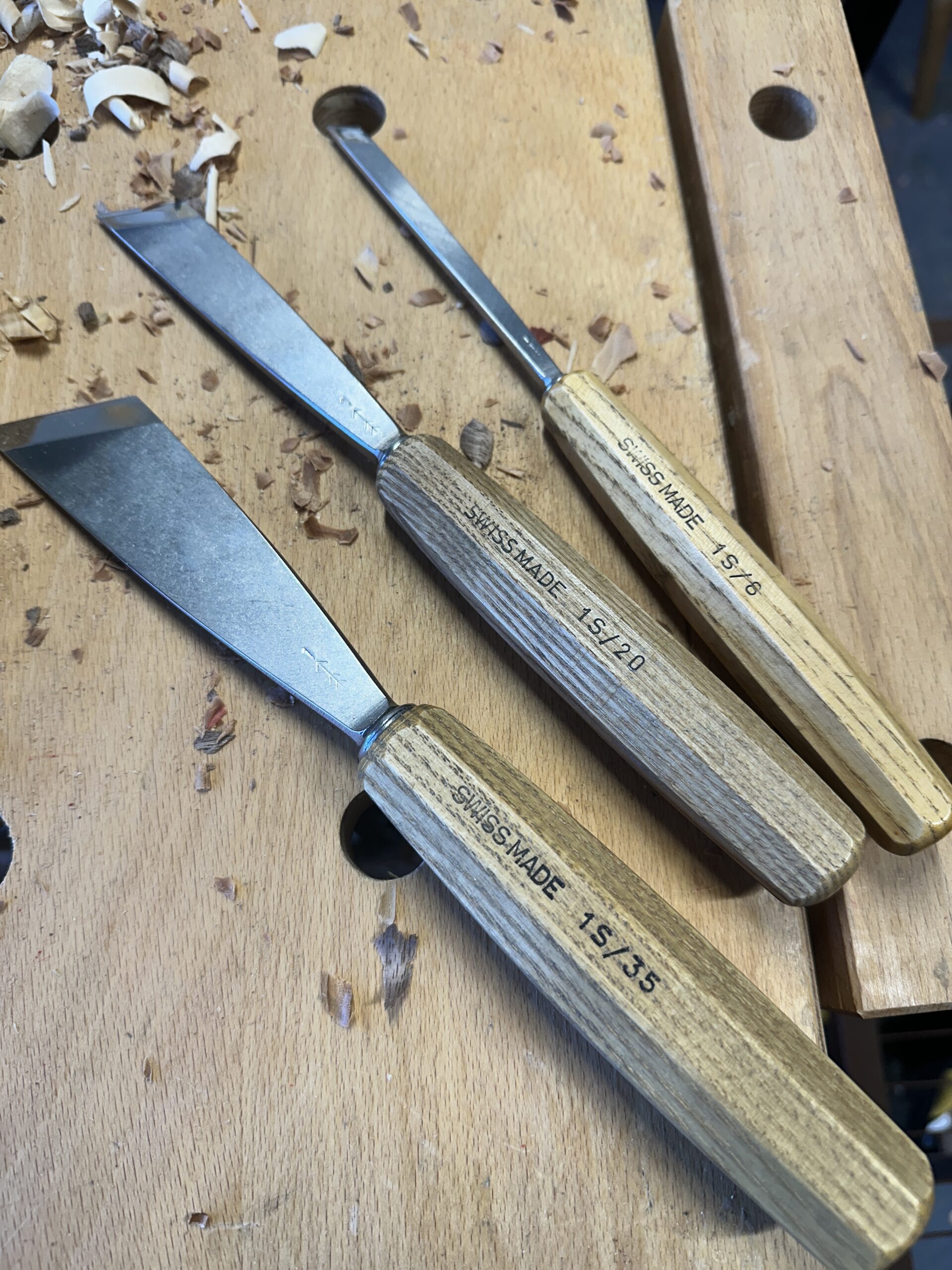
When I was at the Geisler Morodor Woodcarving school in Austria there was 40mm Skew in the student tool kit. I had never really used this tool before and after a week of carving with it I ordered a 20mm and 35mm skew for my personal tools. I am partial to the Swiss Pfiel tools mainly due the flats on the handle which stop it from rolling and the fact the steel is of such high quality. I wanted to visit the factory but they had limited tour windows that did not align with my time in the region. Maybe next time.

I am not a tool collector, but in this case it was incredibly useful despite the fact I laid my hand open on it in the first 90 minutes of class, but that is another story.

The skew is an incredibly versatile tool mainly due to the fact that it can execute a slicing cut much easier than a standard flat gouge. You can also align the tip into some pretty small spaces. It is also incredibly easy to sharpen. Literally lay it down with the bevel on the stone, move forward holding the bevel in place 5-8 times and repeat on the other side. Then hone the same way.

Nutcracker Carvings


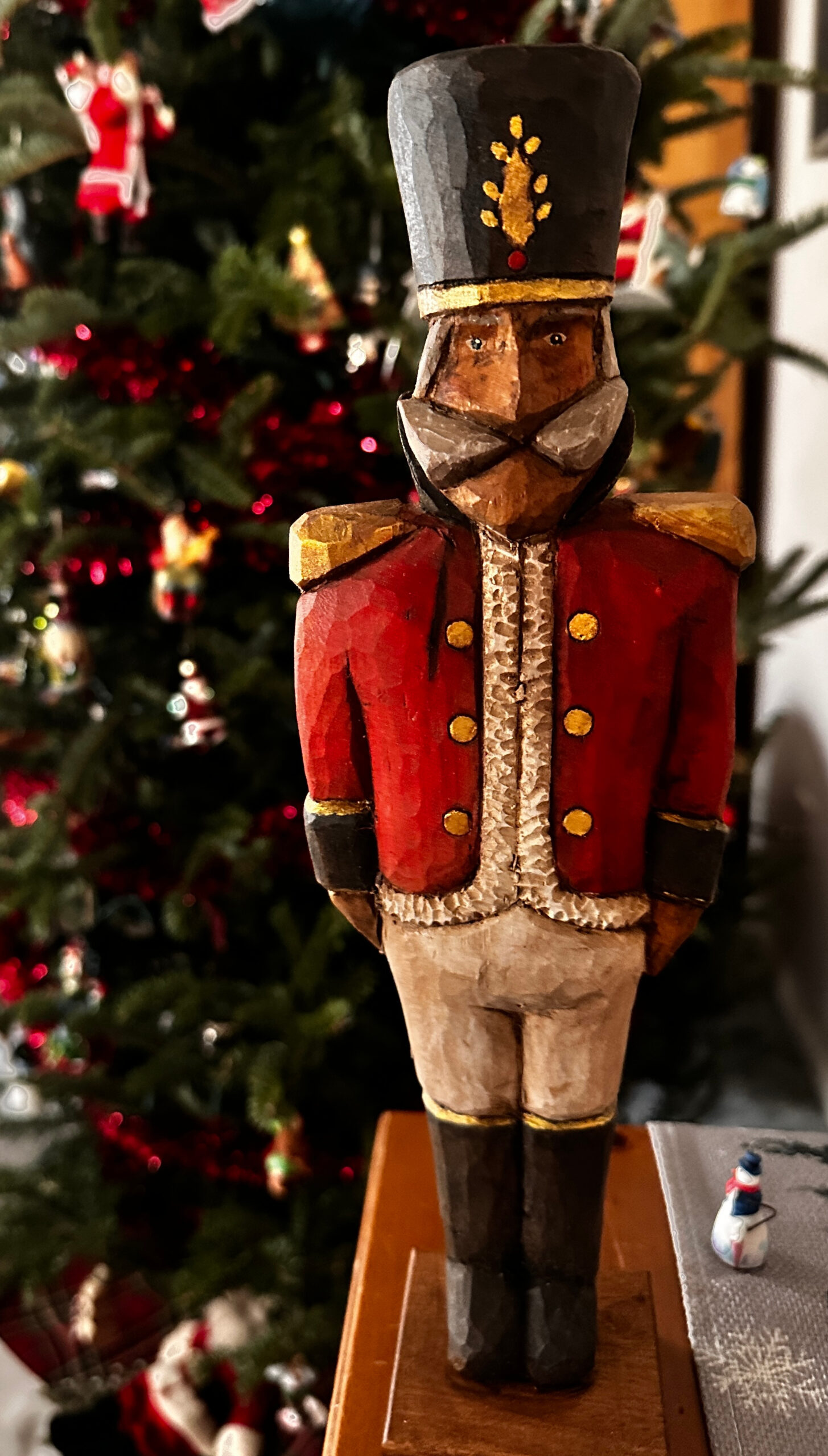
Nutcrackers are a fascinating carving project with literally endless variations in styles and colors. This project began with research into the history of these figure based nutcrackers. I was inspired to do this since my young Grandchildren had an interest int these figures after seeing them at a Christkindlmarkt.

After researching the styles and histories I began making sketches, settling in on a Prussian officers tunic as the style, I decided to make the Mustache the key feature while the rest is fairly angular. The images below show the overall process to make these carvings. I made three as gifts this year.

On these carvings I used a staining technique to get a vintage feel. After staining the colors i use a clear matte poly spray finish to fully seal the wood. I coat it with gel stain. I like General’s colonial maple. Use a toothbrush to get in all the crevices. Then with a clean rag scrub the gel stain off. There is an art to getting just the right amount off. In the images below the Nutcracker on the left with bright white pants has not been stained while the one on the right has, The first image shows the Nutcracker with the gel stain prior to it being wiped off.

These date back to 17th Century Germany when out of work miners used their carpentry skills to make the first versions of what we now know as nutcrackers

They were typically based on authority figures such as Prussian Soldiers and Kings. Common people were using these nutcrackers as a symbolic protest. They were having representations of authority work for them cracking nuts. In addition to the silent protest Nutcrackers were considered to be good luck totems. German homes typcially only had one nutcracker.

In 1892 Tchaikovsky’s suite tied these figures to Christmas and the Nutcrackers style that is still made today. .

Various factories specialized in mass producing Nutcrackers using lathes. After WW2 many American soldiers brought Nutcrackers back home to America.

See